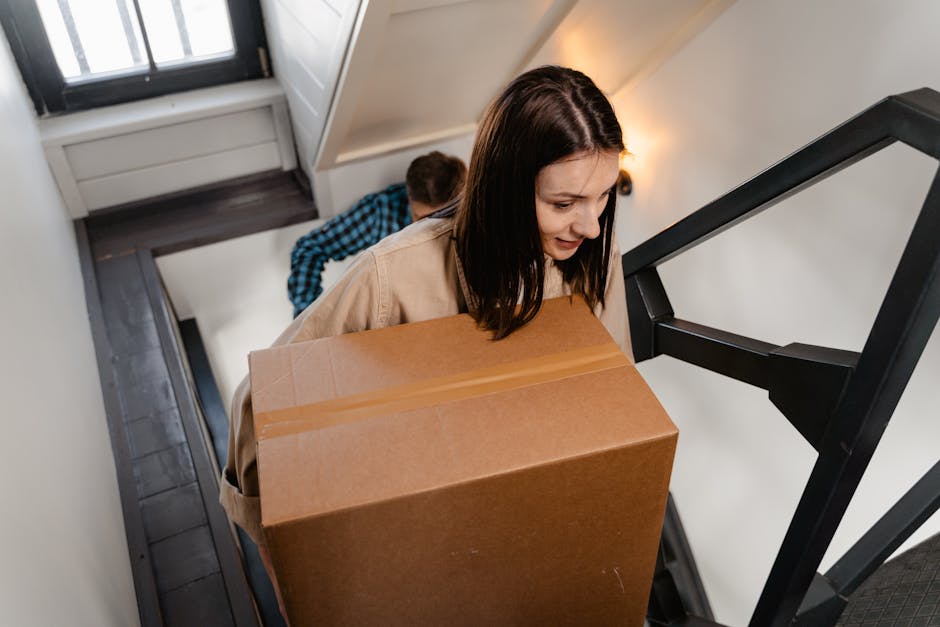
Moving from a Welling flat with tight stairs? Proven fixes
If you are moving from a Welling flat with tight stairs, you already know the problem is not really the boxes. It is the staircase. The bend in the landing, the low ceiling, the awkward handrail, the "how on earth does this sofa turn?" moment... that is what turns a simple move into a proper headache.
The good news? Tight stairs are annoying, yes, but they are not a deal-breaker. With the right planning, the right packing order, and a few practical fixes, you can move out safely without damaging the property, the furniture, or your back. This guide walks through what actually works in real life, especially for flats in and around Welling where access can be a bit fiddly. You will get step-by-step tactics, common mistakes to avoid, and a realistic view of when it makes sense to bring in professional help from a team that understands flat removals in Welling.
One quick note before we get into it: the best fix is rarely brute force. It is usually a small set of smart decisions made early enough to matter. Bit boring, maybe. Very effective, definitely.
Table of Contents
- Why tight-stair flat moves are such a challenge
- How the process works in practice
- Key benefits and practical advantages
- Who this is for and when it makes sense
- Step-by-step guidance
- Expert tips for better results
- Common mistakes to avoid
- Tools, resources and recommendations
- Law, compliance, standards, or best practice
- Options, methods, or comparison table
- Case study or real-world example
- Practical checklist
- Conclusion
- Frequently asked questions
Why Moving from a Welling flat with tight stairs? Proven fixes Matters
Tight stairs change the whole shape of a move. A flat that looks manageable on paper can become awkward the second a mattress meets a narrow turn or a fridge catches the banister. In Welling, especially in older conversions and upper-floor flats, stairwells are often the bottleneck. Not the parking. Not the van. The stairs.
Why does that matter so much? Because access issues affect everything: the time needed to move, the amount of physical effort, the risk of damage, and the likelihood that you will need to dismantle furniture that you thought would simply "fit". Even decent movers can lose time if the route has tight corners, a steep rise, or a landing that forces an awkward lift.
There is also a trust issue. If you are moving out of a rented flat, you will usually want to leave the stairwell, walls, and banisters in good condition. Scuffed plaster and chipped paint are the kind of things that are easy to cause and annoying to sort out afterwards. If you are preparing your place properly, it can help to pair this kind of move with a bit of pre-clearance using advice from our decluttering guide so you are not carrying unnecessary clutter up and down those stairs in the first place.
Truth be told, tight stairs also expose weak planning. People often pack fine for the van but not for the staircase. Those are two different problems. And the staircase usually wins if you ignore it.
Expert summary: If the stairwell is narrow, the most effective fixes are usually to reduce item size, reduce item weight, protect the route, and control the order in which items come out. Planning beats rushing every time.
How Moving from a Welling flat with tight stairs? Proven fixes Works
The basic idea is simple: you make the move fit the building, not the other way around. That means measuring access, identifying obstacles, stripping down furniture where possible, and moving in a sequence that matches the layout of the flat.
Here is what that looks like in practice.
1) You assess the route before lifting anything
Check the stair width, the sharpest turn, any low light fittings, and where the handrail juts out. A tape measure helps, but so does a slow walk with your eyes open. Sometimes the issue is not the width of the stairs; it is the landing angle or a door that opens the wrong way.
2) You reduce the size of items before moving day
Flat-pack wardrobes, bed frames, dining tables, and some sofas can often be partially dismantled. That one job can turn an impossible carry into a straightforward one. If you are moving a bed, it is worth using a methodical approach like the one set out in this bed and mattress moving guide.
3) You control the load
Heavy items should be packed in smaller boxes, not monster cartons. That sounds obvious, but moving day pressure does strange things to common sense. A smaller box is easier to balance on a stair turn and less likely to swing into a wall.
4) You protect the property and the furniture
Door frames, banisters, corners, and floors should be covered where needed. Furniture should be wrapped so it does not scrape or snag. Sofas are a classic problem item, so it can help to look at sofa protection and storage tips if that is one of your bigger pieces.
5) You choose the right carrying method
Sometimes two people and a careful angle are enough. Sometimes you need more control, more padding, or a different route altogether. There is no prize for forcing a bad lift. If something feels wrong on the stairs, it usually is.
This is where good communication matters. One person should call the pace. One person should guide. No silent surprises halfway down the staircase, please. That is how people end up doing the awkward shuffle and everyone hates that shuffle.
Key Benefits and Practical Advantages
Getting the stair problem right gives you more than convenience. It changes the whole move.
- Less damage: Furniture is less likely to get gouged, scratched, or bent on the way out.
- Lower risk of injury: Better load management means less strain on shoulders, wrists, and backs.
- Faster progress: A move that has been planned around access usually runs more smoothly and with fewer pauses.
- Better use of labour: You are not wasting energy trying the wrong route twice.
- Less stress: When the staircase has already been solved in your head, moving day feels much more under control.
- Cleaner handover: Useful if you need to leave a flat tidy for landlords, agents, or the next resident.
There is another benefit people miss: confidence. Once you know the awkward items will fit, everything else gets easier. Boxes stop feeling like a puzzle and start feeling like a task list. That may sound small, but on moving day it matters a lot.
If you are trying to keep costs sensible, planning properly can also reduce the need for extra trips, emergency fixes, or last-minute storage. For readers comparing options, pricing and quotes can be a useful starting point when weighing up the value of professional support versus a DIY move.
Who This Is For and When It Makes Sense
This approach is useful for anyone moving out of an upper-floor flat with tight or awkward stairs, but it is especially helpful for:
- tenants in older Welling flats with narrow internal staircases
- students moving bulky items on a tight budget
- households with sofa beds, wardrobes, mattresses, or appliances
- people moving without a lift in the building
- anyone who has already looked at the staircase and thought, "that is going to be fun" - in the least fun sense
It makes the most sense when the access issue is the main challenge, not the total volume of belongings. If the move is small but the stairs are brutal, careful planning can solve a lot. If the move is large, heavy, or time-sensitive, you may need a more structured service such as man and van support in Welling or a fuller moving service depending on what you are shifting.
Students often run into this problem because they are juggling deadlines, short tenancy gaps, and a handful of bulky possessions. If that sounds familiar, student removals in Welling may fit the situation better than trying to wing it with a borrowed car and a couple of determined friends.
Step-by-Step Guidance
Here is the part that saves the day. Follow it in order if you can.
- Measure the staircase and the worst turn. Measure width, headroom, and landing space. If in doubt, measure the furniture too. Not just the length - the depth and height of the item can be the thing that catches.
- List the awkward items first. Beds, mattresses, wardrobes, mirrors, fridges, desks, and sofas usually decide the move. Boxes are rarely the issue. It is the big stuff.
- Dismantle wherever practical. Remove legs, headboards, shelves, drawers, and doors where needed. Keep fixings in labelled bags. It seems small, until you are hunting for six identical screws at 7:40 in the evening.
- Pack lighter boxes. Use smaller boxes for books and heavy items. Leave enough room to grip the sides safely.
- Prepare protection materials. Use blankets, wraps, tape, and floor protection where appropriate. Protect the route before the first item moves.
- Move the biggest items first or last, deliberately. The best order depends on the building. Sometimes it is smarter to clear the awkward furniture while everyone is fresh. Sometimes it is better to finish with the bulky items once the route is open. Decide this before you start, not while sweating on the landing.
- Use a spotter on the stairs. One person should guide from below or above, especially at corners and blind turns.
- Take breaks before fatigue sets in. Once someone gets tired, balance gets worse. That is where accidents creep in.
- Keep walkways clear. Shoes, bin bags, loose packaging, and random clutter become trip hazards very quickly.
- Re-check the route before each large item. It is astonishing how often a handrail, open door, or box on the landing causes a problem after the first few items went fine.
If your move involves delicate or bulky items that need more specific handling, it helps to read up on related topics such as safe ways to handle heavy items and kinetic lifting techniques. Those pieces can give you a better sense of body mechanics and safer coordination.
Expert Tips for Better Results
A few small adjustments make a big difference. Honestly, this is where most of the value lives.
Use the right angle, not more force
For furniture on stairs, the "fits or doesn't fit" question often depends on angle. A tall item may need to be tilted, rotated, or carried with the longer side vertical. Forcing it straight through is a common mistake.
Protect corners before the first lift
Banisters and wall corners take a beating on tight staircases. A bit of padding saves a lot of regret. You do not want to be the person apologising to a freshly painted hallway because the wardrobe got a bit enthusiastic.
Separate fragile items from the main flow
Glass, mirrors, lamps, and picture frames should travel in a slower, more controlled sequence. They do not belong in the middle of a scramble.
Label by room and priority
Labels make unloading easier, but they also help you load in a sensible order. If you know what must come off first at the new place, you can keep it near the van door or at least separate from the heavy furniture.
Plan parking and access outside the building
Even with a perfect stair strategy, poor kerbside access can unravel the day. If your move sits near busy roads, station access, or restricted parking, a bit of local thinking helps. For useful Welling-specific context, have a look at parking and permits on Station Road and best hours for Welling Station pickups.
One more thing: if you have a tight deadline, a same-day solution can be the difference between a chaotic exit and a controlled one. When timing is really tight, same-day removals in Welling may be worth considering.
Common Mistakes to Avoid
These are the errors that keep coming up. Some are small. Some are the sort that make everyone stand still on the landing and sigh.
- Not measuring the staircase properly. Guessing is a bad plan.
- Leaving dismantling until moving day. That is when impatience starts making decisions for you.
- Overpacking boxes. Heavy boxes are harder to balance and more likely to split.
- Ignoring corners and ceiling height. Width is only part of the story.
- Moving without enough people on the route. One person carrying and another watching often beats two people both guessing.
- Forcing large furniture through a route that clearly does not suit it. If you have to twist something in a way that feels wrong, stop and rethink.
- Skipping floor and wall protection. A tiny scrape can become a bigger issue later.
- Trying to do everything in one rush. A slower move is often a cleaner move.
A particularly common issue with flats is that people focus on the inside of the property and forget the staircase belongs to a shared building. That means tighter etiquette matters. Keep noise down where you can, do not block the landing for longer than needed, and leave shared areas tidy. You will feel better for it, and so will everyone else.
Tools, Resources and Recommendations
You do not need a truck full of fancy gear, but the right basics help a lot. Here is a practical kit for tight-stair moves:
- Measuring tape: for stair width, furniture depth, and landing turns.
- Furniture blankets or padded covers: to reduce knocks and scrapes.
- Strong tape and labelled bags: to keep screws, bolts, and fittings organised.
- Work gloves: for a steadier grip and a bit more protection.
- Box cutter or basic toolkit: for dismantling, not for improvising on the stairwell itself.
- Stretch wrap: useful for holding drawers shut or bundling awkward edges.
- Floor protection: especially if rain has been tracked inside and the stairs are a bit slippery.
If your move includes a piano, do not treat it like a large box. It is not. Pianos are heavy, delicate, and awkward in exactly the wrong ways. For that reason, it is sensible to read why piano moving needs expertise or go straight to piano removals in Welling if the instrument is part of your move.
For other bulky household pieces, furniture-specific support can help, especially if you are moving sofas, tables, or awkward wardrobes. See also furniture removals in Welling and broader service options if you need a more joined-up plan.
Law, Compliance, Standards, or Best Practice
For a flat move, the main compliance concerns are usually safety, property care, and honest service expectations. In plain English: do not put people at risk, do not damage shared property, and do not assume every staircase move is safe just because it is possible.
In the UK, a professional moving setup should generally work to sensible manual handling practices and good health-and-safety habits. That means taking weight seriously, using enough people for the task, and avoiding lifts that are obviously unsafe. If a route looks too tight for the item, the correct answer is often to dismantle, re-route, or pause rather than push on.
If you are using a removals provider, it is fair to expect clear terms, transparent pricing, and suitable care for belongings. It can also help to understand how the company handles risk, claims, and complaints before the move starts. Useful pages to review include insurance and safety information, the health and safety policy, and the terms and conditions.
For privacy, payment handling, and service transparency, you may also want to read payment and security alongside the privacy policy. It is not exciting reading, admittedly, but it does help you know what to expect.
And if you are researching the company itself before booking, about us is the natural place to start.
Options, Methods, or Comparison Table
When stairs are tight, you usually have three main approaches. The best one depends on item size, access, time, and confidence level.
| Method | Best for | Strengths | Limitations |
|---|---|---|---|
| DIY with careful planning | Small to medium flat moves, lighter furniture, low volumes | Lowest direct cost, flexible timing, full control | More physical effort, higher risk if stairs are awkward, slower if you are inexperienced |
| Mixed help: friends plus one professional vehicle or helper | Moderate moves where access is the main challenge | Cheaper than a full service, still offers extra muscle and coordination | Friends may not have experience, coordination can be patchy |
| Full removals support | Bulky items, time pressure, fragile belongings, difficult stairs | Faster, safer, less stress, better handling for awkward items | Costs more than doing it yourself |
In real life, people often start by wanting DIY, then realise the stairs change the calculation. That is normal. The question is not "can I move it?" but "can I move it safely, without wrecking the route and my weekend?"
Case Study or Real-World Example
Here is a very typical Welling-style scenario. A couple living in an upper-floor flat had a sofa, a double bed, a small fridge, six medium boxes, and a staircase with a very tight turn halfway up. Nothing extreme on paper. In person, the landing was the problem. The sofa looked like it might fit, but only if it was angled carefully and lifted above the handrail height at the right point.
They did three things that made the move work:
- They measured the stairwell and the sofa before moving day.
- They removed the sofa feet and the bed frame slats in advance.
- They moved boxes out first so the stairwell stayed clear.
It still took patience. There was a point where the sofa had to pause on the landing while one person guided and the other adjusted the angle. Nothing dramatic, just a proper stop-and-think moment. That pause probably saved the wall corner from being smashed to bits. A small thing, but those small things add up.
They also kept the lighter boxes separate from the heavy ones, which meant nobody was trying to carry a book box that felt like a sack of bricks. Sensible? Yes. Surprisingly rare? Also yes.
The move finished on time, the flat was left in decent condition, and the stairwell did not look like it had been through a rugby match. That is the standard worth aiming for.
Practical Checklist
Use this before the van arrives.
- Measure stair width, landing space, and the tightest corner
- Measure the biggest items and check whether they need dismantling
- Pack heavy items into smaller boxes
- Label boxes by room and priority
- Wrap furniture and protect corners
- Clear hallways, landings, and the route to the front door
- Confirm parking and access arrangements outside
- Keep tools, tape, and fixings in one easy-to-reach bag
- Decide who will guide, who will carry, and who will spot on stairs
- Set aside extra time for awkward items
- Check whether any piece should be moved by a specialist
- Have a backup plan for items that do not fit on the day
If you have items that do not need to travel immediately, or if the new place is not ready yet, storage in Welling can be a sensible pressure valve. Not glamorous, but very useful when stair access is tight and timing is messy.
Get a free quote today and see how much you can save.
Conclusion
Moving from a Welling flat with tight stairs is one of those jobs that looks straightforward until you are standing on the landing with a sofa that will not turn. The good news is that the problem is usually solvable. Measure properly, dismantle early, pack lighter, protect the route, and move in a calm sequence rather than a rushed one.
If the access is especially awkward, there is no shame in getting help. In fact, that is often the smartest move. A well-planned flat move feels a bit like clearing a stubborn puzzle: once the first tricky bit works, the rest of it starts falling into place. And when the final box lands in the van and the staircase is clear, you will feel that lovely, slightly surreal relief that only comes after a proper move. Worth it, in the end.
Frequently Asked Questions
How do I move furniture down tight stairs without damaging the walls?
Measure first, dismantle what you can, and pad the stair edges, banister, and furniture corners. A spotter should guide the item at the turn so the load stays controlled instead of swinging into the wall.
What is the easiest way to move a sofa from a flat with narrow stairs?
Usually the easiest route is to remove the legs, wrap the sofa, and tilt it carefully rather than carrying it flat. In some cases, a sofa that looked impossible suddenly becomes manageable once it is slightly rotated and the route is cleared.
Should I hire professionals for a Welling flat move with a tight staircase?
If you have bulky furniture, a time limit, or a staircase that looks genuinely awkward, professional help is often worth it. It reduces physical strain and usually lowers the chance of damage. If the move is small, DIY may still work with good planning.
How early should I measure the stairs before moving day?
As early as possible. A week or two in advance is ideal, because it gives you time to dismantle furniture, swap boxes around, or book help if needed. Waiting until the last evening is how stress sneaks in.
What items are most likely to cause trouble on tight stairs?
Wardrobes, mattresses, sofas, fridges, beds, mirrors, and desks are usually the troublemakers. Boxes are normally fine unless they are overpacked or awkwardly shaped.
Can a mattress be carried up or down narrow stairs safely?
Yes, often it can, but it depends on the stair width and the landing turn. Keep it upright, control the angle, and make sure the path is free. If the mattress folds or twists badly, stop and rethink the route.
Is it worth dismantling furniture before moving out of a flat?
Usually, yes. Dismantling can turn a difficult carry into a much simpler one. It also reduces the risk of scraping shared hallways or getting stuck on the landing. It is a bit of effort upfront, but often saves a lot of hassle later.
What if my furniture does not fit through the stairwell at all?
Then you need to consider dismantling further, taking a different route, or using a specialist moving method. Forcing it is not a good idea. Sometimes the safest option is to leave the item for separate handling or storage.
How can I make moving day less stressful in a tight-stair flat?
Pack by priority, keep the stair route clear, protect walls and corners, and avoid rushing the biggest pieces. A good moving plan makes a huge difference. If you want extra tips for the wider moving process, this stress-free relocation guide is worth a look.
Do I need parking arrangements as well as stair planning?
Yes, absolutely. A perfect staircase plan can still be disrupted if the van cannot park close enough. It is worth sorting access and parking in the same planning session, not as an afterthought.
What should I do with heavy items I cannot move safely?
Do not try to muscle through alone. Use safer lifting methods, get help, or book a specialist service for the item. Heavy pieces can be deceptive on stairs; they feel manageable until the angle changes.
Are same-day removals a sensible option for flat moves with tight stairs?
Sometimes, yes, especially if your timing is tight or a move has changed at the last minute. The key is to be honest about the access problems so the right vehicle and help can be arranged. Otherwise the day gets complicated very quickly.
How do I know whether my move needs a full removals service or just a man and van?
Look at volume, weight, access, and time pressure. A few lighter items may suit a man and van approach, while multiple bulky pieces or a tricky stairwell often justify fuller support. If in doubt, compare your options against the move itself, not just the budget.